Mashed butternut squash and eggs on flatbread
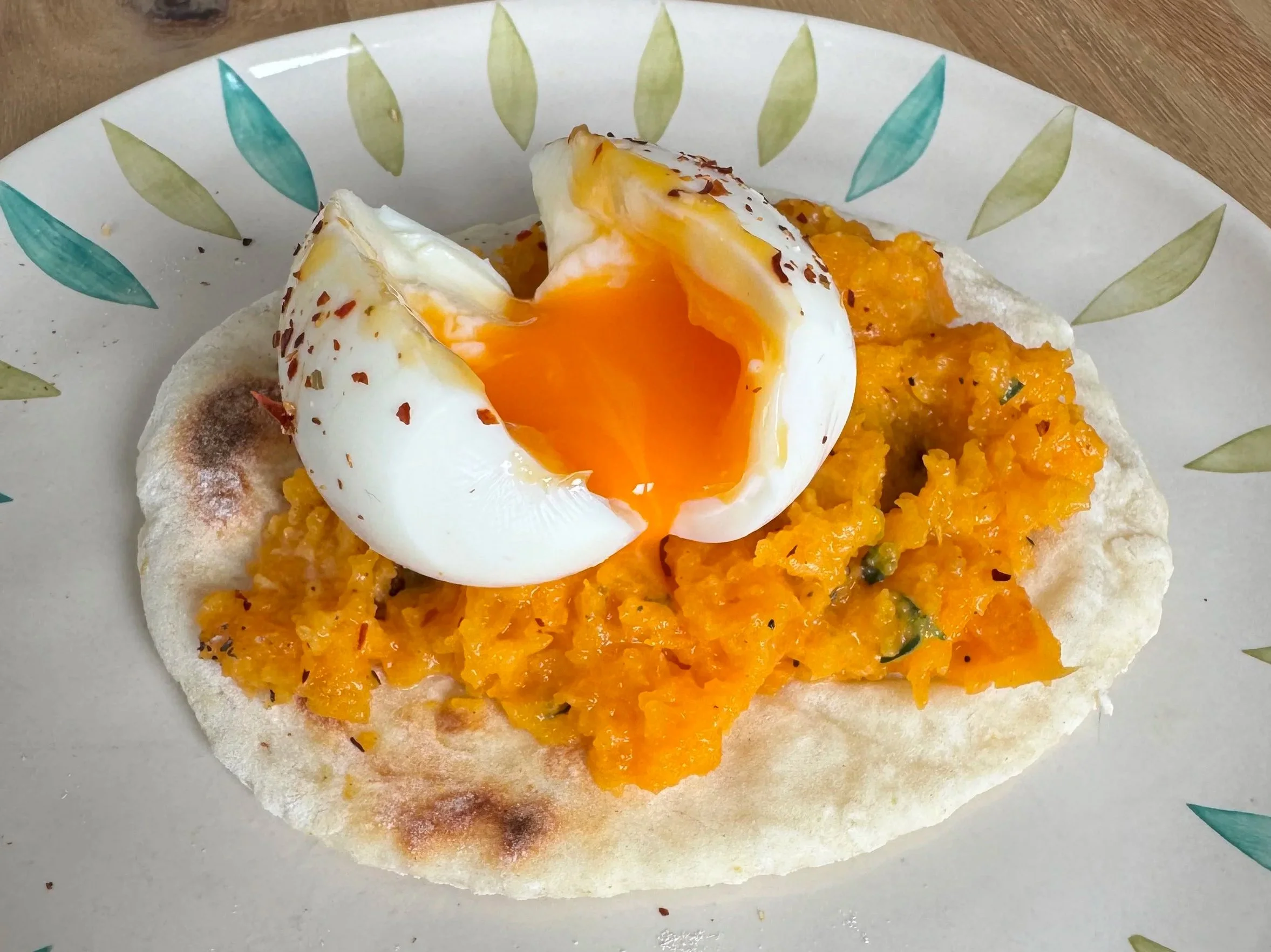
I was at a lunch restaurant recently and I was immediately intrigued by a dish on their menu. Nowadays, almost any cafe or restaurant serving typical lunch/brunch style meals will have some variation of avocado on toast, or avocado smash on a bagel, pitta… you name it. As much as I do love bread with avocado, and there is no doubt that is an amazingly, healthy nutritious lunch choice, sometimes I do fancy a little more variation in the options I can choose from. On the menu of this particular location, I was drawn to what they called sourdough with smashed pumpkin. A thick slice of fresh bakery bread was served with roughly mashed pumpkin, spiced with chilli flakes, and was topped off with pumpkin seeds and eggs (sadly they were slightly overdone).
When I was brain storming new recipe ideas last week, I thought; you know what I think I could create my own version of this and potentially improve the original dish. Although sourdough bread is super delicious, I believe a homemade flatbread works well with this recipe. Butternut squash is less fatty than avocado, hence alongside a thick slice of toast, you may find it hard going and a challenge to eat. The quick and easy flatbread is soft and warm, and also provides an extra protein boost, as it is made with greek yoghurt. To complement the butternut squash, I mashed it with a drizzle of honey for extra sweetness, and thyme to add an earthy, woody note. Even though I added honey, I personally think a teaspoon of miso mixed in, off balances it from tasting too overwhelmingly sweet or dessert like, by bringing an umami flavour. As mentioned, butternut squash is low in fat, which means when mashing it, something is required to prevent it from having a claggy mouth feel, and to create a silkier, richer texture when eating. Not only this, but the incorporation of fats, helps us to absorb vitamins present in the butternut squash. Vitamin A is fat soluble, and beneficial in keeping our immune function steady, aiding in cellular growth, and helps to keep our tissues healthy. You may notice that because of your struggles with an eating disorder, the state of your skin is not at its best. It may be dry, and thin, and not looking as optimally fresh as it once did. The great thing is that your skin is repairable, and consuming vitamin A (along with the fats which help it to be absorbed), will help you in the process of giving you your glow back.
I added two poached (or peeled soft boiled eggs) on the top of the butternut squash mash, both for taste profile, and to add in a source of both fat and protein to the meal. As you cut into the eggs, the runny yolk floods over the butternut squash, which cuts through the starchiness, and adds depth and richness. Eggs can be defined as nutritional powerhouses, packed full of vital minerals and vitamins, many of which, those essential in your recovery process. They are high in vitamin D, needed for maintaining strong and healthy bones and teeth, due to its ability to aid our phosphorus and calcium absorption. Secondly, eggs are rich in vitamin B12, one of the major deficiencies seen in those suffering with eating disorders. Low levels of vitamin B12 can lead to anaemia, fatigue as well as having an influence on our cognitive abilities, potentially causing anxiety and depression symptoms, confusion and difficulty with memory. Choline is also found in eggs, assisting in brain function and development, as well as being vital for optimum liver and nerve function. Iron deficiency is also very common after periods of malnutrition, hence why the iron in eggs is particularly important to prevent us from becoming severely anaemic, and suffering from fatigue. Lastly, eggs are rich in omega-3s, a fatty acid promoting good brain and heart health and may even have the ability to reduce symptoms experienced from mental health struggles.
The Steps of the Process
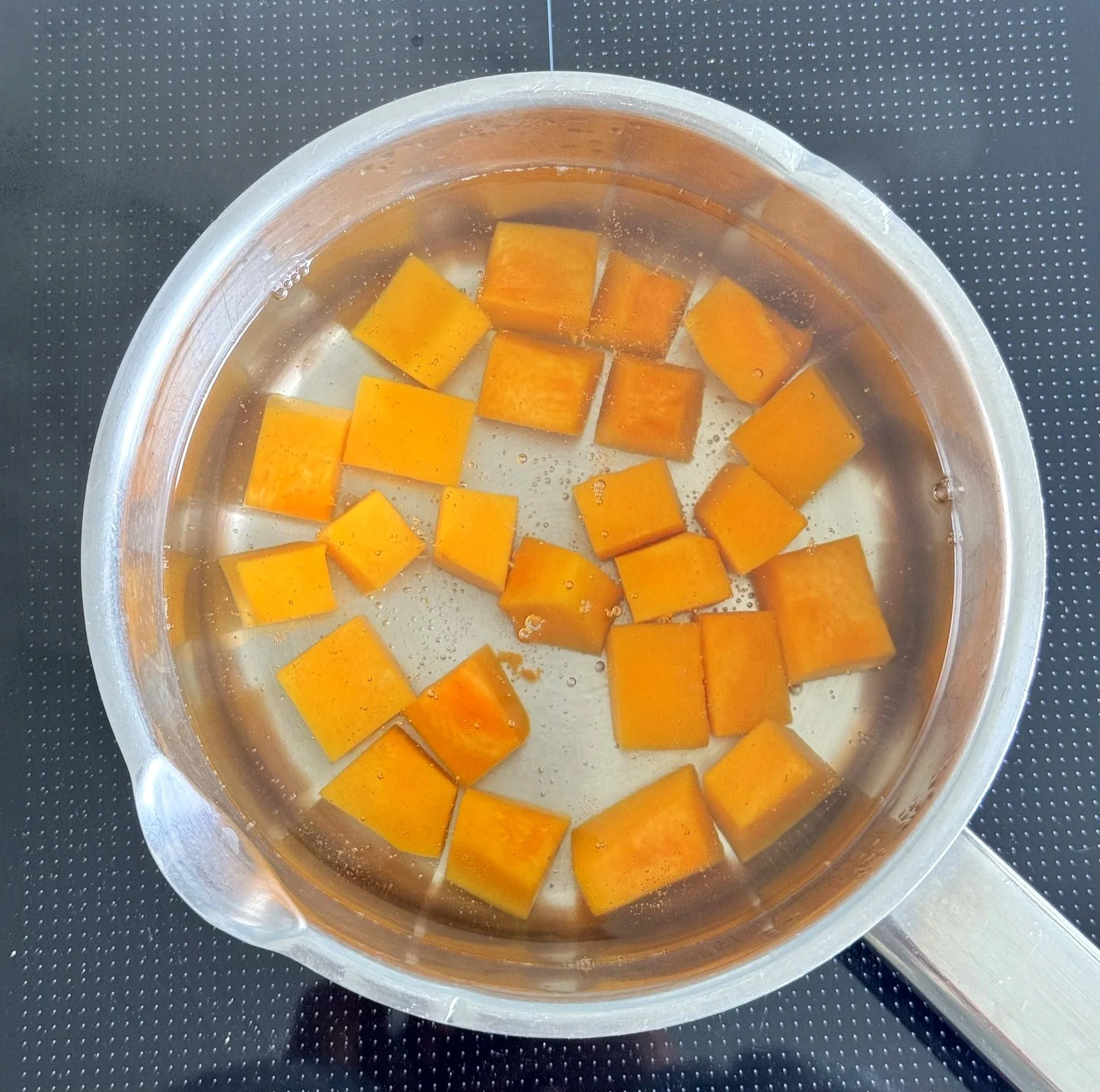
I start by boiling 2cm cubes of butternut squash in a pan of salted boiling water, until they are soft and tender enough to be mashed.
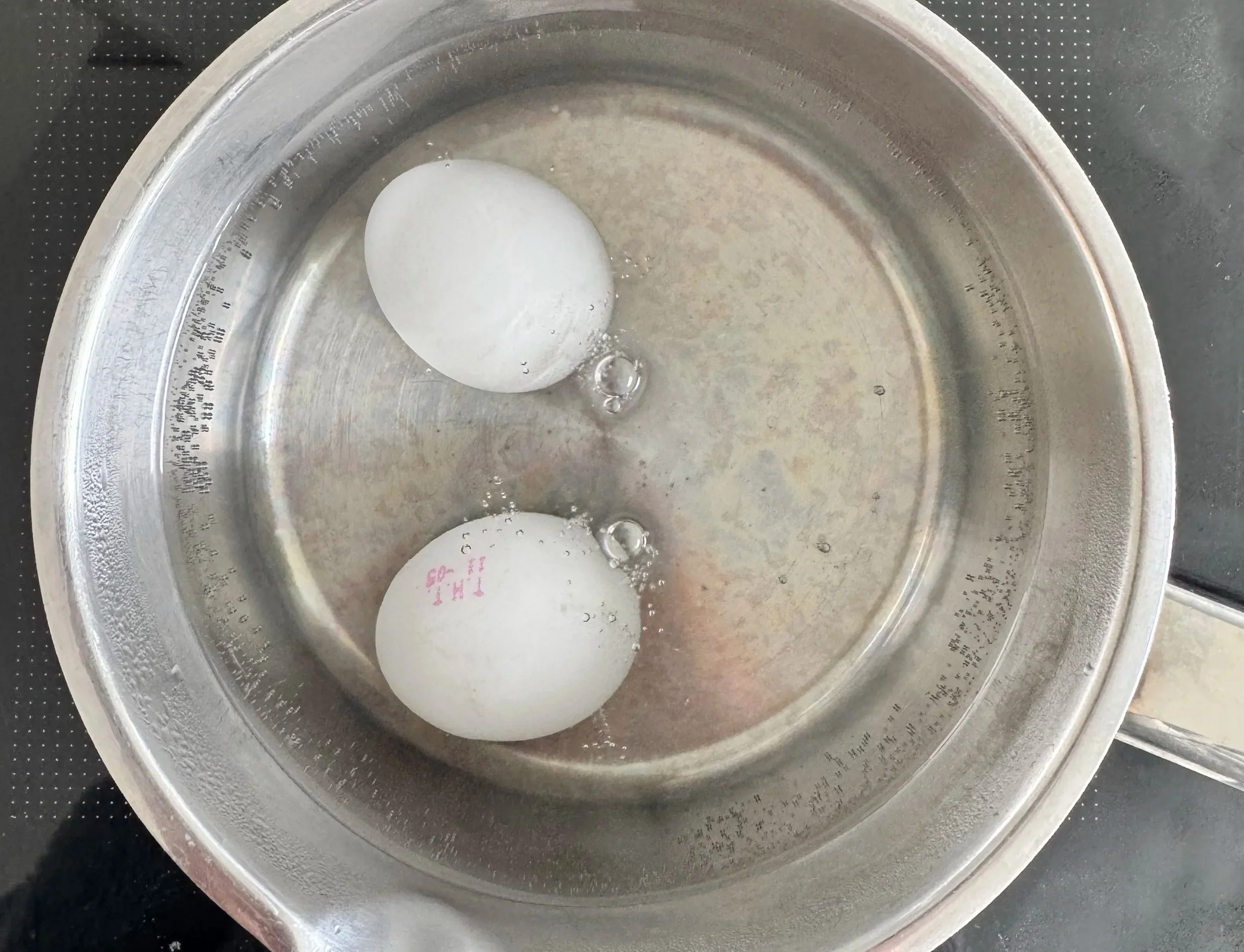
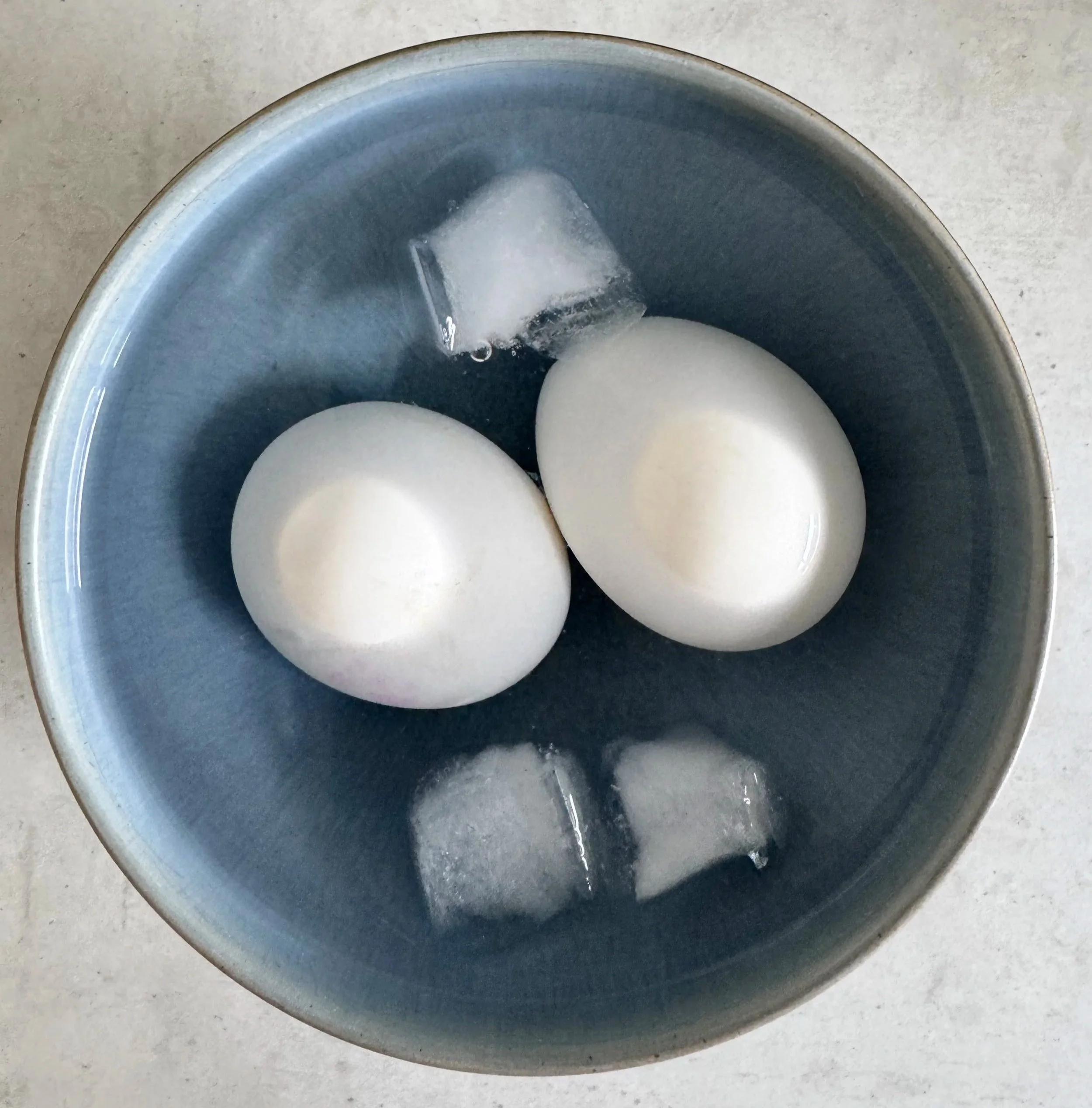
Whilst preparing the squash, I boil eggs for 6 minutes, to the point where the yolk should still be jammy and not firm. After being boiled, I place them in a boil of cold, iced water, to make them easier to peel for topping the flatbreads with
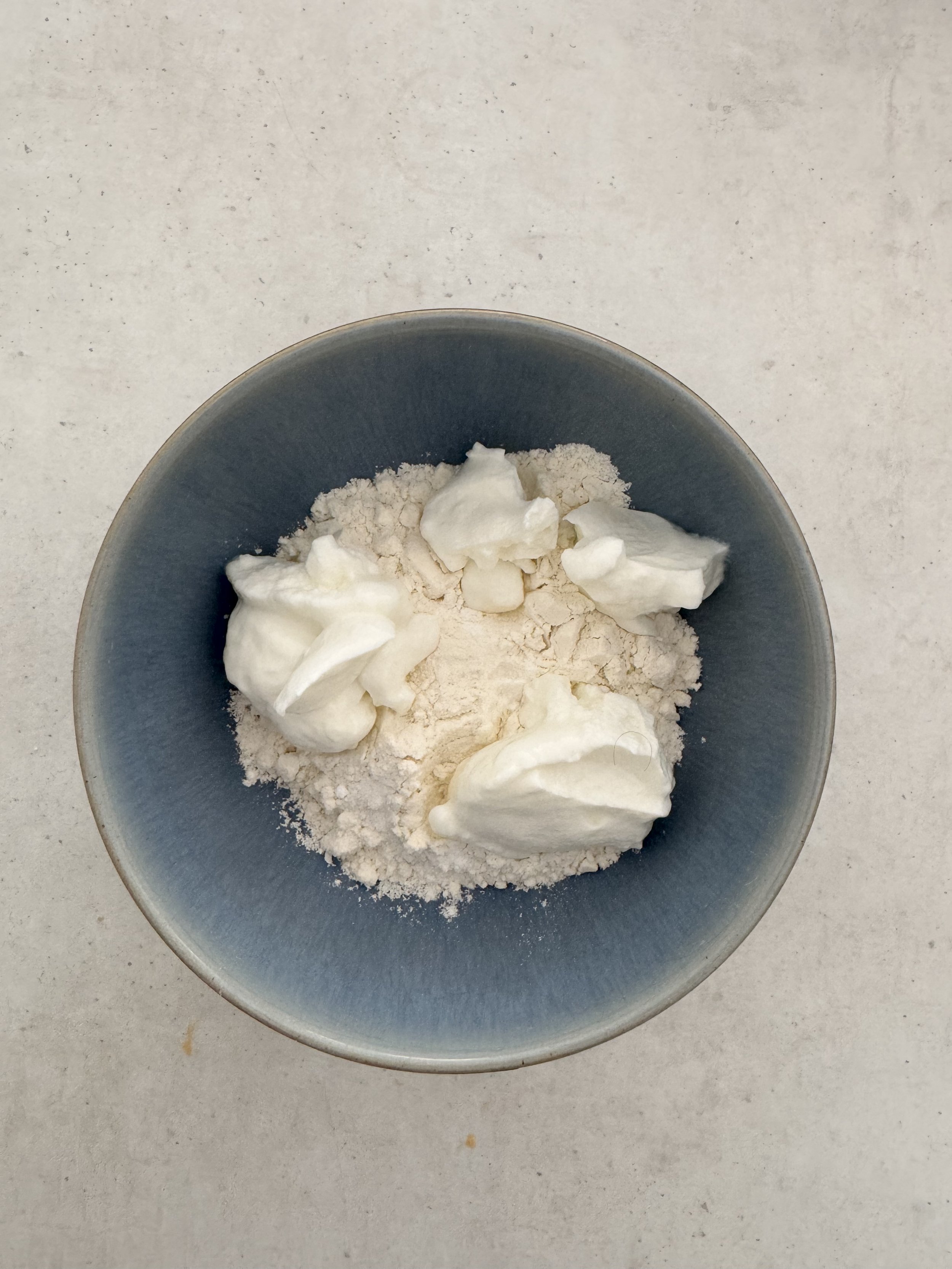
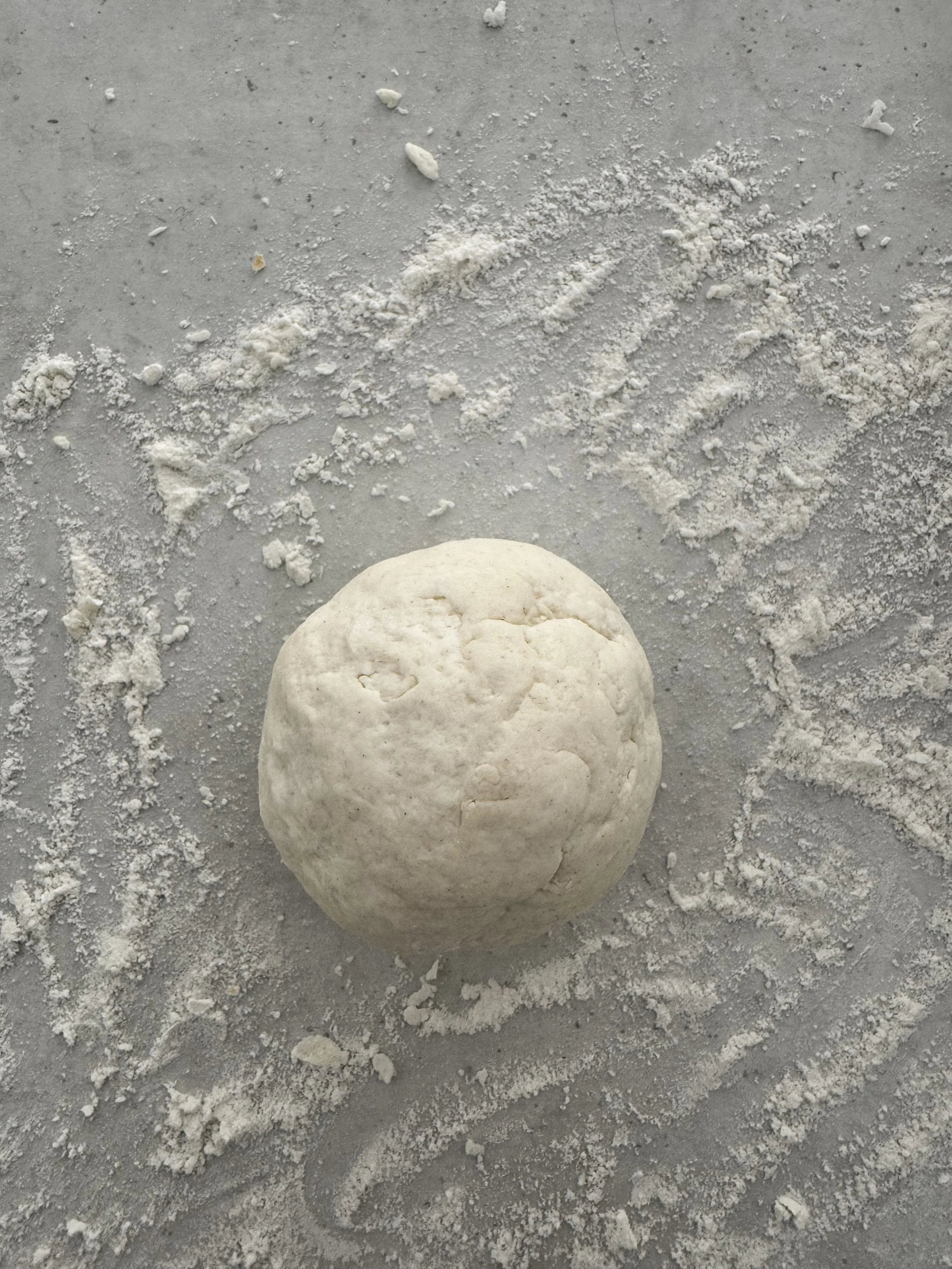
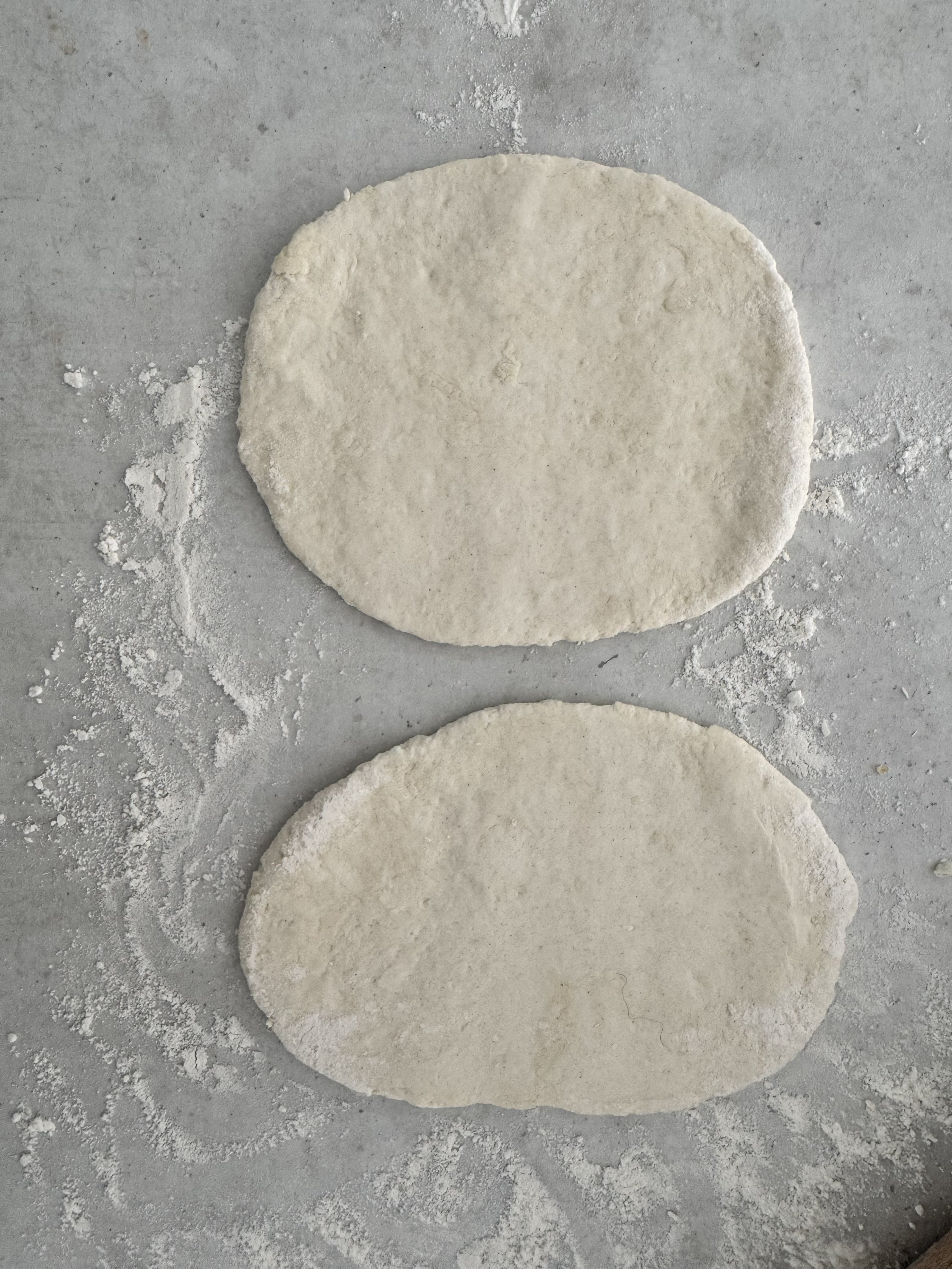
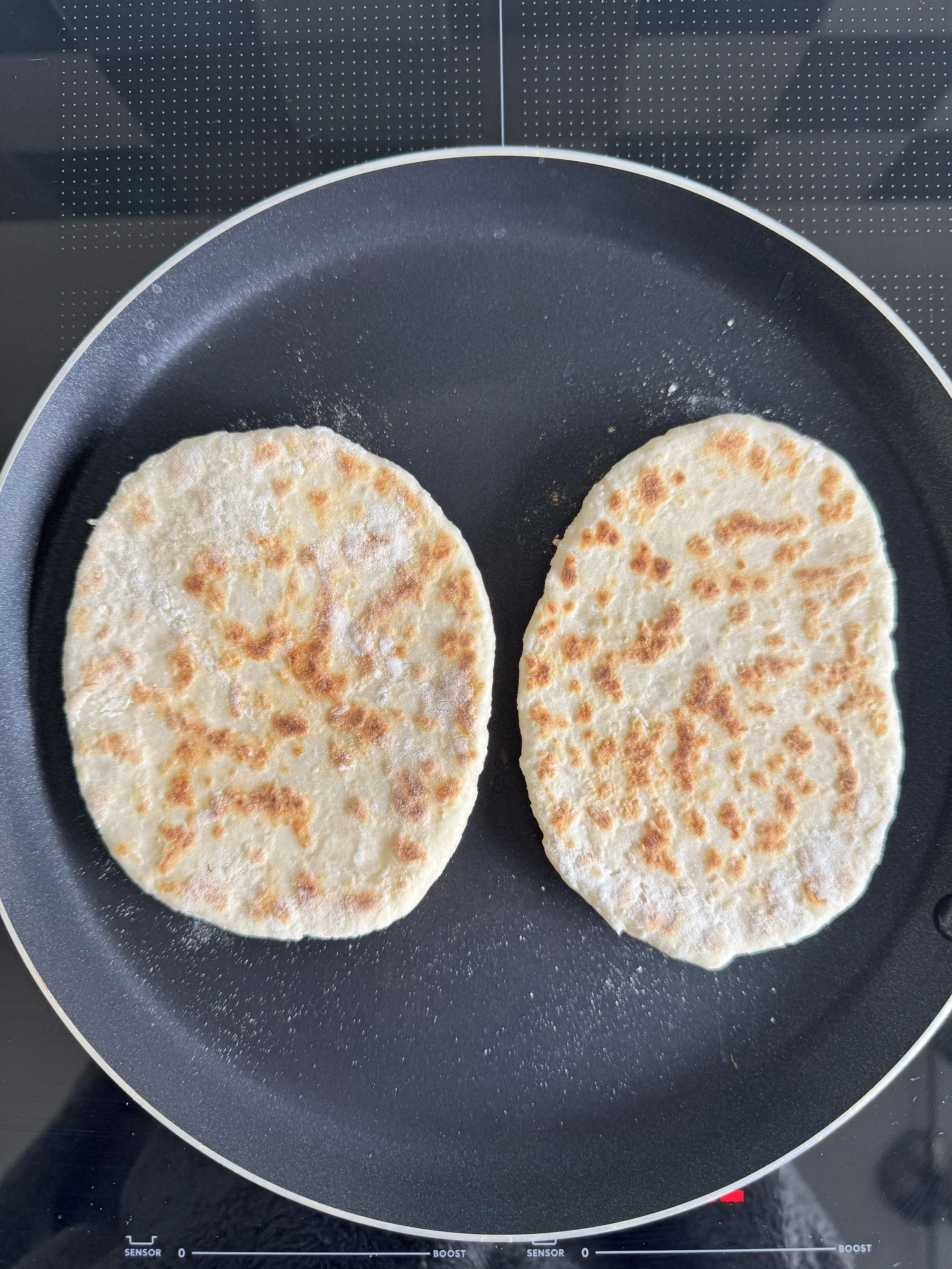
To make the flatbread/s, mix equal parts of plain flour and greek yoghurt with a pinch of salt and ½ tsp baking powder until a dough is formed. You may need to knead this slightly until a smooth mix is created. You can then decide to roll it out on a floured surface into one big flatbread, or half the ball of two, and roll into two smaller flatbreads. Cook these on a dry pan for a few minutes on each side, until browning slightly, and the edges are crisp.
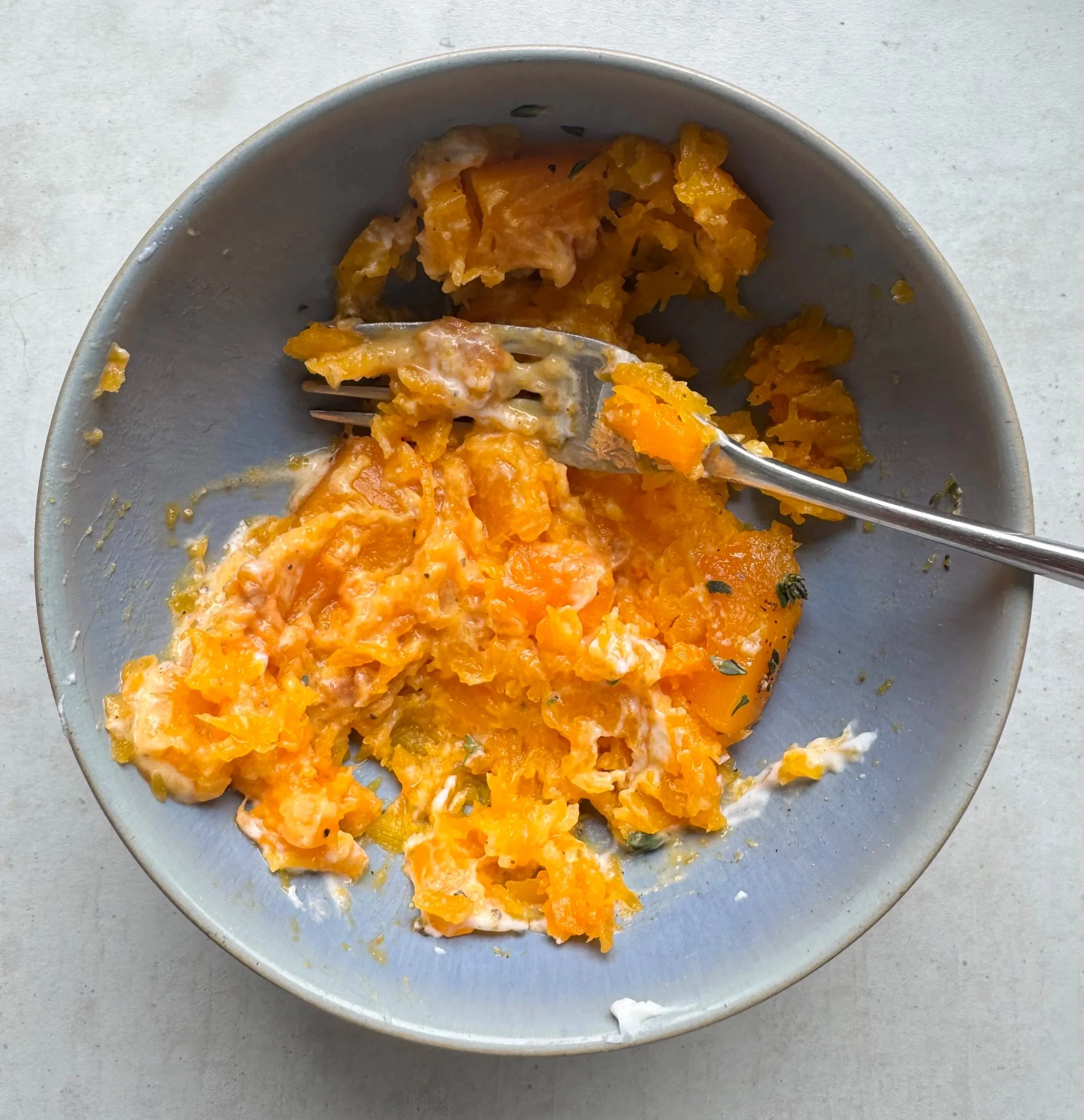
Once the squash has been removed from the boiling water, mash 2/3 of it with a fork, and cut the remaining squash into even smaller cubes to stir through at the end. Mix the squash with some butter or cream cheese, along with a drizzle of honey, tsp of miso, salt and pepper, some thyme leaves and a squeeze of lemon juice for a burst of acidity.
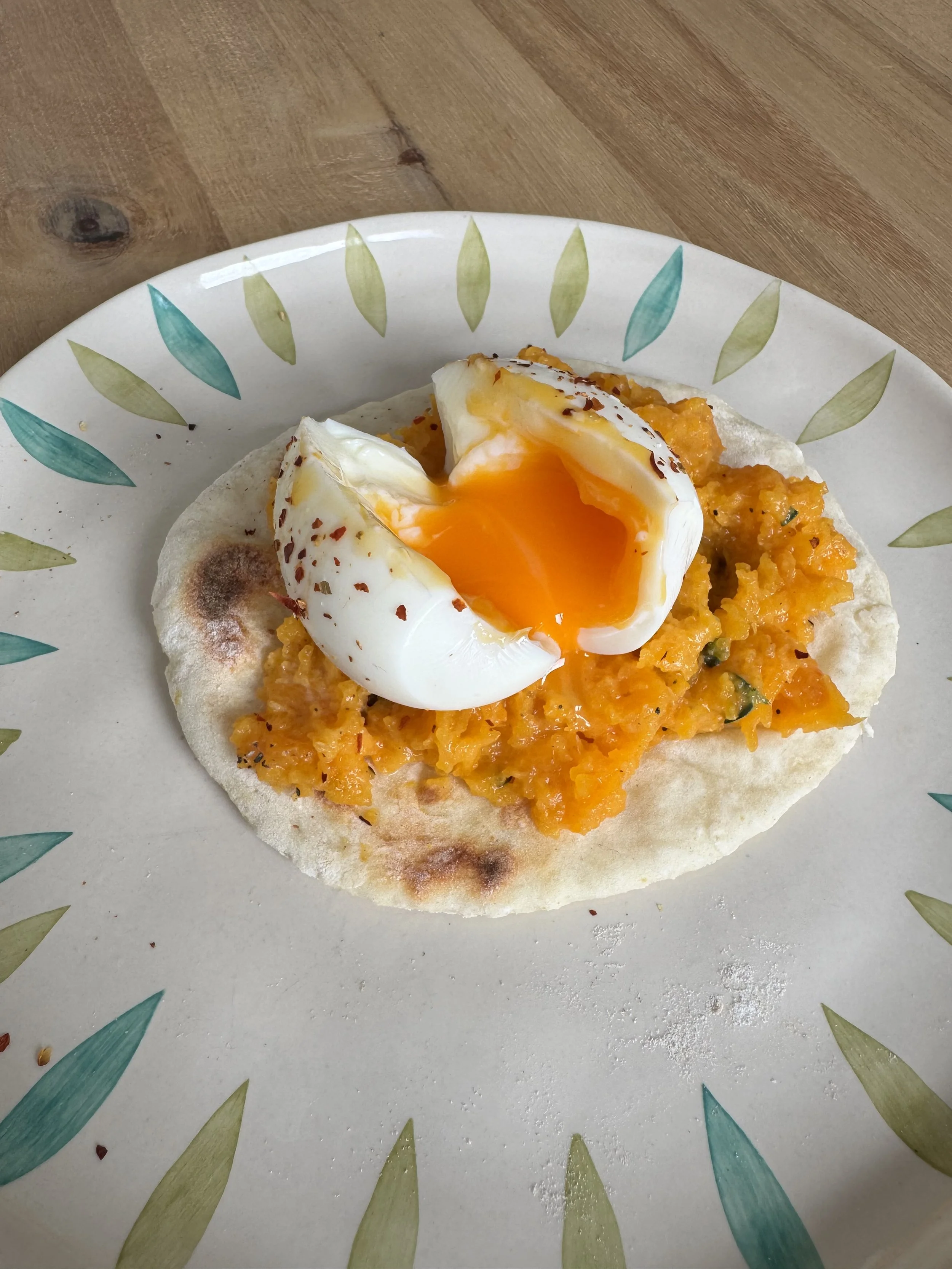
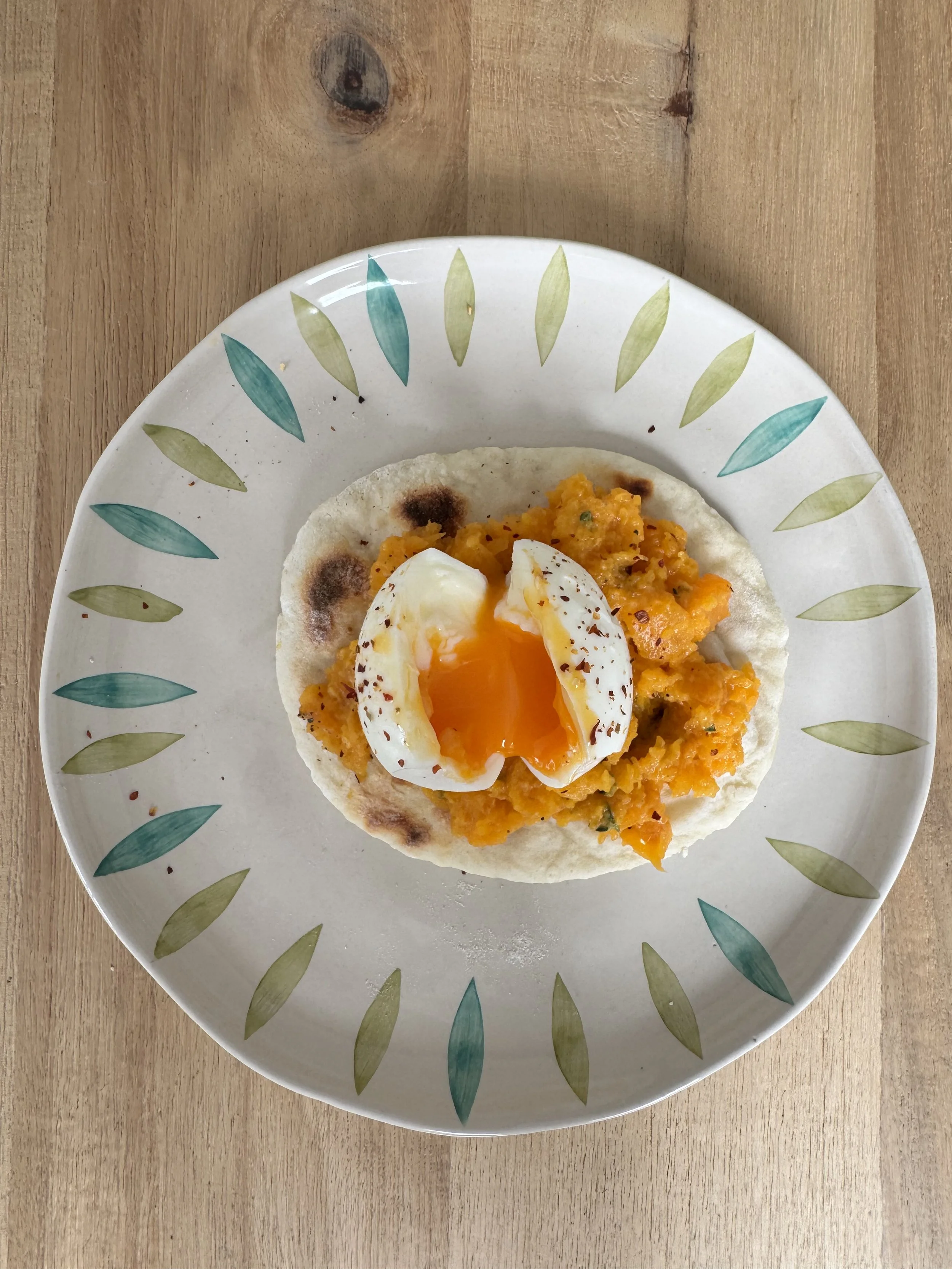
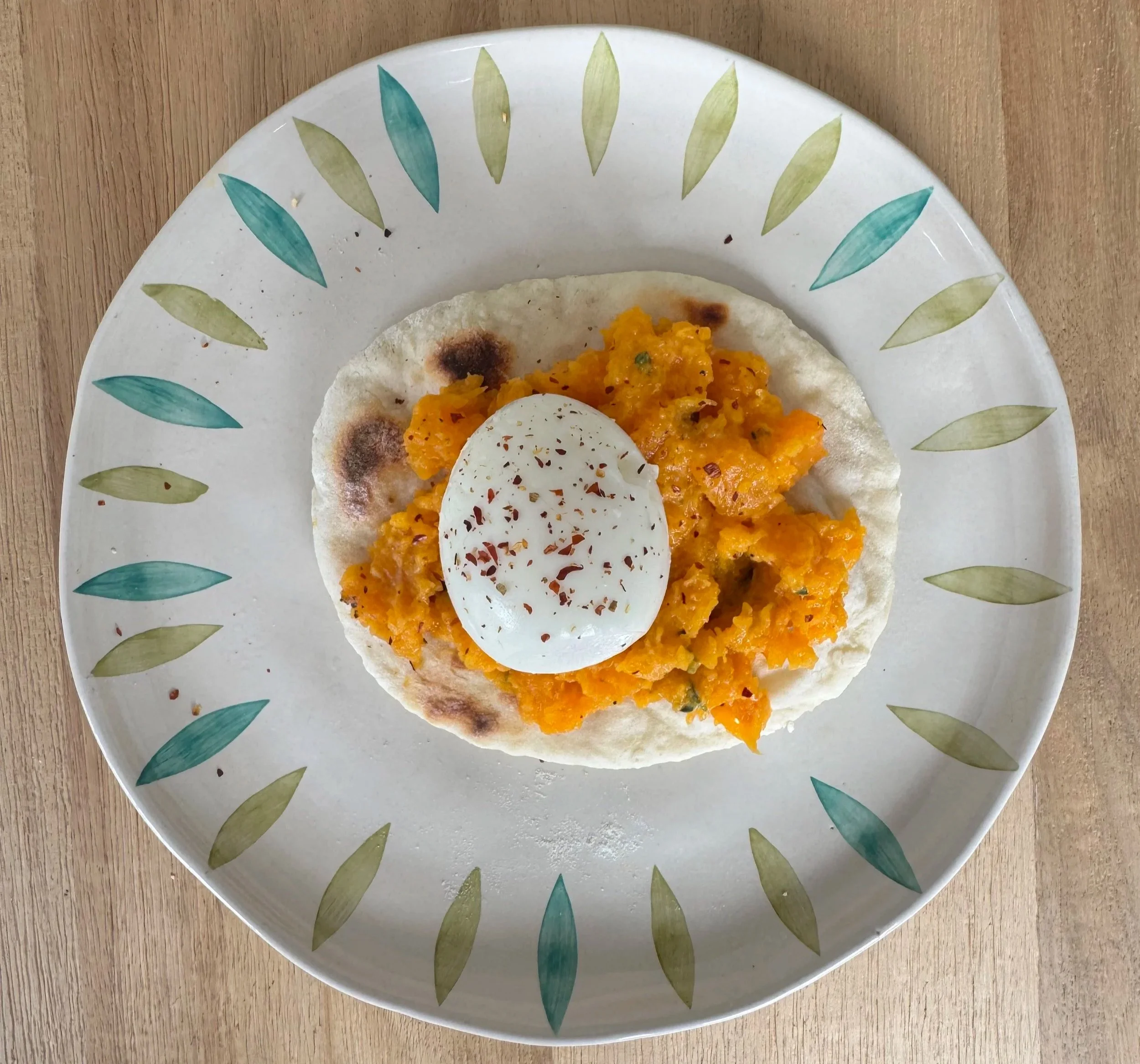
Spread the butternut squash mixture onto the flatbreads, and top with the peeled, soft boiled (or poached eggs)/. Sprinkle with chilli flakes if you wish, and dig in! (P.S. this recipe makes two mini flatbreads with two soft boiled eggs, to serve one, however the image only shows ½ a portion)
Ingredients + Measurements
125g butternut squash, peeled and cut into cubes
1 tbsp cream cheese (or tsp of butter if you prefer)
1tsp honey
1 tsp miso paste
Thyme leaves
Squeeze of lemon juice
2 eggs
55g greek yoghurt
55g plain flour
¼ tsp baking powder
1/8tsp salt
Method:
Bring a small saucepan of salted water to the boil, and boil the pieces of butternut squash for about 12 minutes, until tender. Drain and set aside.
Whilst the squash is boiling, boil your eggs in a pan, for 6 minutes, so they are cooked through, but the yolk is still jammy. Transfer the eggs into a bowl of iced, cold water, and allow them to sit for a few minutes. After the eggs have had time to cool down for a while, peel them, and continue to make the rest of the components of the dish. For the same effect, instead of soft boiling then peeling your eggs, you could always poach them!
In a small bowl, mix together the greek yoghurt, flour, baking powder and salt for the flatbreads. Stir until a sticky dough forms, you may need to bring it together with your hands, and knead gently to create a smooth ball.
Lightly flour a clean surface, split the flatbread mix into two, (or decide to make one large flatbread). Using a rolling pin, roll the dough out into thin flatbreads.
Heat a non-stick frying pan over medium heat, and place the flatbreads into the pan, cooking for a few minutes on each side, until golden brown and slightly crisp.
Mash 2/3 of the butternut squash using a fork, adding the cream cheese to make this step easier. On a chopping board, cut the rest of the butternut squash into even smaller chunks. Add the honey, miso, thyme, a squeeze of lemon, some salt and pepper, and the squash chunks to the mash.
Spread and top the flatbreads with the butternut squash concoction, top each mini flatbread with a peeled soft boiled egg.
If you wish, add some chilli flakes, and enjoy!
Notes
Feel free to leave out the miso paste. You could always add another condiment to elevate the squash mash.
Other additions which would work for the dish are, feta cheese, pumpkin seeds za’atar seasoning, or even tahini!